
From a city shaped by waves of dreamers — to a city still full of them
"A home is not just four walls and a roof. It is the place where your children learn to ride their bikes, where your neighbours become your people, and where your family writes its own story."
— Patricia Grieco, Broker
Toronto: A city built by families, for families
Long before the glass towers and the subway lines, Toronto was a patchwork of neighbourhoods. Each one was shaped by the families who arrived and chose to stay. From the British settlers who built their Victorian homes along the tree-lined streets of Annex and Riverdale in the 1800s, to the Italian and Portuguese communities who transformed the west end in the 1950s and 60s — Toronto has always been a city that grows when families plant roots.
Incorporated as a city in 1834, Toronto sat on the northern shore of Lake Ontario, a modest town of 9,000 people. It grew quickly. By the early 1900s, it was one of Canada's most important cities — a hub of commerce, immigration, and ambition. Families came from England, Scotland, Ireland, Italy, Ukraine, Greece, China, the Caribbean, South Asia, and Latin America. Each community added its character to the streets, the schools, and the parks we still love today.
What is remarkable is how much of that original neighbourhood character has survived. The brick semi-detached homes of Leslieville, the ravine-lined streets of Lawrence Park, the wide porches of Bloor West Village — these are not just houses. They are the living memory of the families who came before us and chose Toronto as their home.
Today, Toronto is home to over 2.9 million people across 140 distinct neighbourhoods. It is one of the most multicultural cities in the world. And still, families keep coming — because this city offers something rare: community, opportunity, and a place to belong, all in the same address.
A note from Patricia before we dive in
I came to Toronto from Buenos Aires in 2003 — as an immigrant, a professional, and eventually, a broker. I have walked more streets in this city than I can count. I have seen families find their perfect home in every single neighbourhood below. This guide is not just data. It is built on years of listening to what families actually need — and watching them thrive once they find the right place.
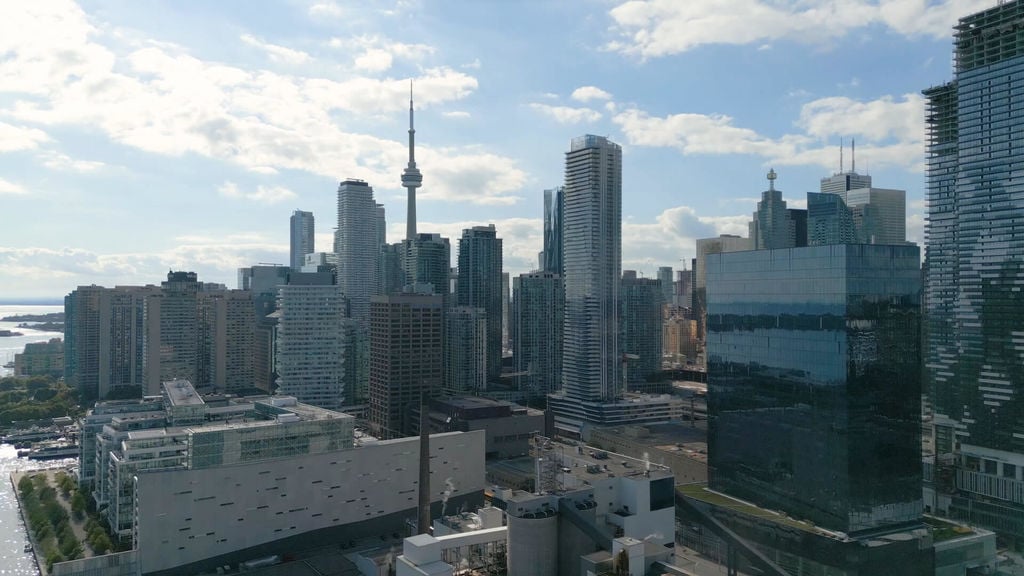
What families look for — and what Toronto delivers
Before we look at specific neighbourhoods, it helps to understand what matters most to families choosing a home in Toronto. From my work with buyers every day, the priorities are consistent: school quality, green space, safety, sense of community, and access to transit. Toronto excels in all of these — though different neighbourhoods deliver them in different ways and at different price points.
Here is what the research tells us right now. The Fraser Institute, which ranks Ontario schools annually, gives some Toronto neighbourhoods scores above 9 out of 10. Toronto Police data consistently shows that established family neighbourhoods like Leaside, The Beaches, Forest Hill, and High Park rank among the city's safest. And TRREB market data shows that family-oriented neighbourhoods — even in a softened market — hold their value because demand from growing families never really goes away.
The neighbourhoods: a closer look
High Park & Bloor West Village
West Toronto · Est. character from the 1910s–1920s
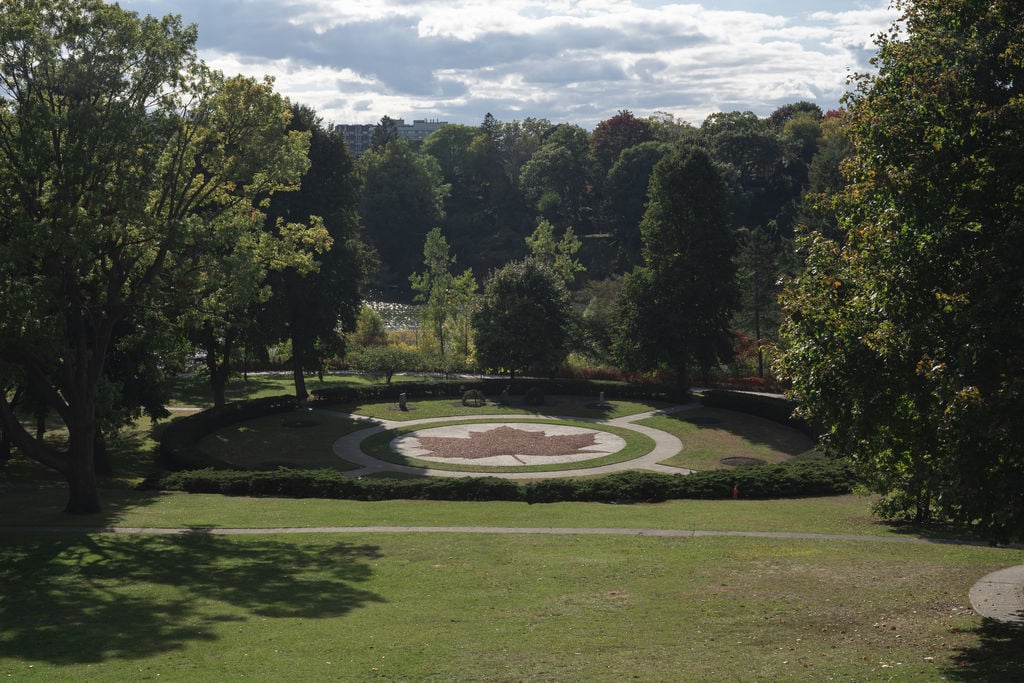
High Park on a sunny day in Toronto.
If you want to raise children surrounded by nature in the heart of Toronto, High Park is hard to beat. The park itself — nearly 400 acres — has a free zoo, hiking trails, a splash pad, playgrounds, an outdoor theatre, and picnic areas that feel miles away from the city. And yet, you are steps from the Bloor subway line.
Bloor West Village, which borders the park, has the feel of a small town tucked inside a big city. It began as a working-class neighbourhood in the early 20th century and transformed over decades into one of Toronto's most beloved communities. The local shopping strip along Bloor Street is full of independent bakeries, cafes, and shops — the kind that know your name.
Schools here are strong. Humberside Collegiate Institute holds a Fraser rating of approximately 8.9/10. Runnymede Junior and Senior Public School and Humbercrest Public School are both well regarded. And the Ukrainian festival, the annual street fairs, and the neighbourhood hockey leagues give Bloor West Village a community heartbeat that young families feel instantly.
- Detached avg. $1.8M–$2.2M
- Fraser score ~8.9/10
- Bloor subway access
- 400 acres of parkland
Leaside
East York · Developed in the 1920s as a planned community
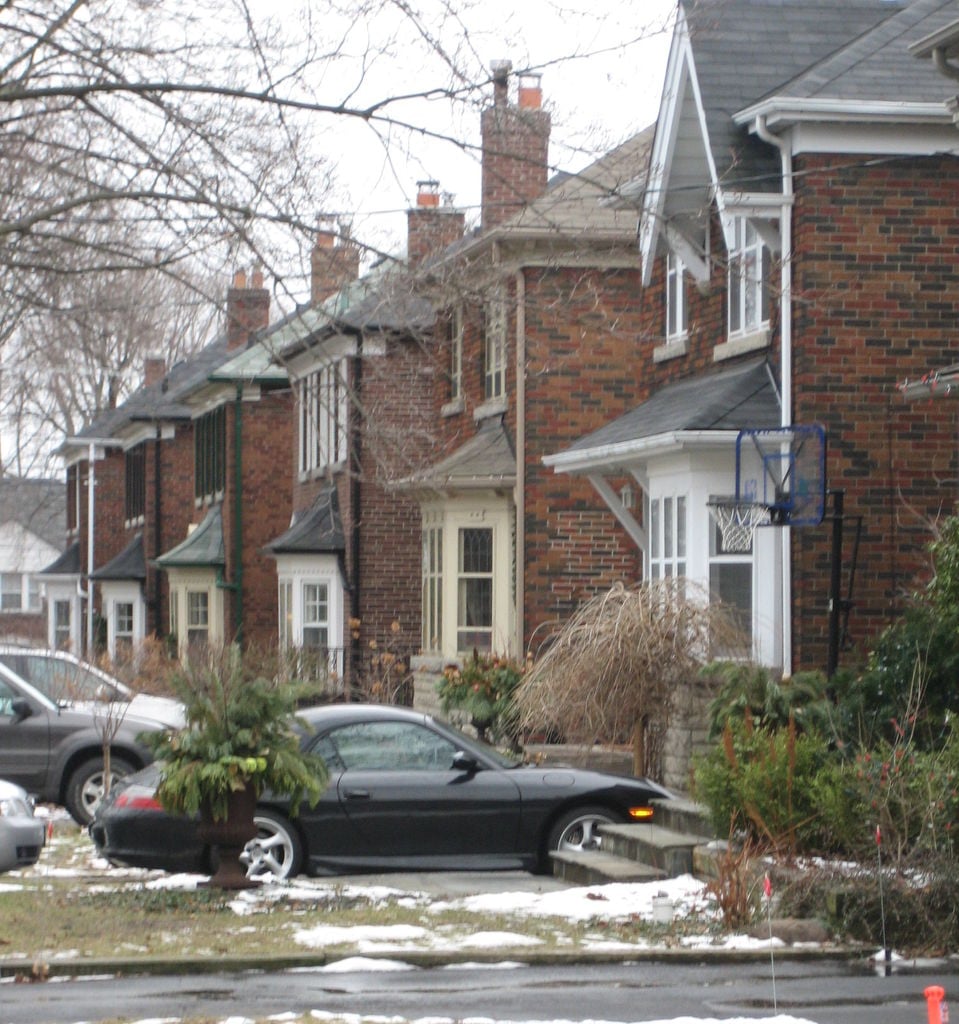
easide has a fascinating origin story. It was built in the 1920s as one of Canada's first planned suburban communities — designed from the start with wide streets, parks, and family life in mind. That intentional design still shows today. The traffic is low. The streets are calm. And the neighbours actually know each other.
It is consistently one of Toronto's most searched family neighbourhoods, and for good reason. Leaside High School holds a Fraser score of 9.2 out of 10, and Bessborough Elementary is equally well regarded. The community centre offers year-round programs for every age — swimming, skating, soccer, arts, and more. Trace Manes Park and Howard Talbot Park give kids space to run. Bayview Avenue offers boutique shopping and weekend farmers' market energy.
The upcoming Eglinton Crosstown LRT will make Leaside even more connected — adding transit access that will increase both convenience and long-term property value. For families who want safety, schools, and a tight-knit feel without sacrificing city access, Leaside checks every box.
- Detached avg. $2.3M–$2.6M
- Fraser score 9.2/10
- Crosstown LRT coming
- Low crime rates
The Beaches
East Toronto · Lakefront community since the late 1800s
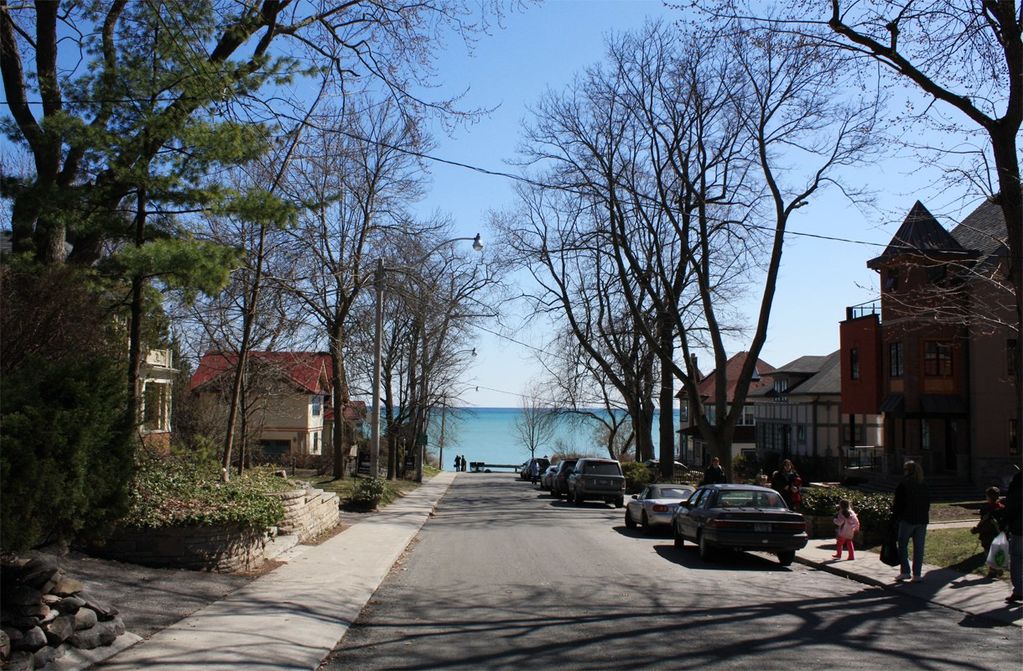
There is something almost magical about raising children in The Beaches. The neighbourhood sits right on Lake Ontario, with a 3-kilometre wooden boardwalk, sandy shores, and Kew Gardens park at its heart. On summer mornings, families are biking the boardwalk before breakfast. On fall evenings, they are watching the leaves change along the ravine trails.
This neighbourhood has been a cherished escape since the 1880s, when Torontonians first built summer cottages along the shore. Over time, those cottages became year-round homes, and the village feel never left. Today, The Beaches has 13 public schools, 11 parks, and one of the most active community associations in the city. Festivals, outdoor concerts, and the annual Jazz Festival make it a place where strangers quickly become neighbours.
The Queen streetcar connects residents directly to downtown in about 20 minutes. Detached homes average around $2.0M, while semis and towns start from $1.2M — making it one of the few waterfront neighbourhoods where families at different budgets can still find a way in.
- Detached avg. ~$2.0M
- 13 public schools
- 3km lakefront boardwalk
- Queen streetcar downtown
Lawrence Park & Bedford Park
North Toronto · Heritage architecture from the 1920s and 1930s
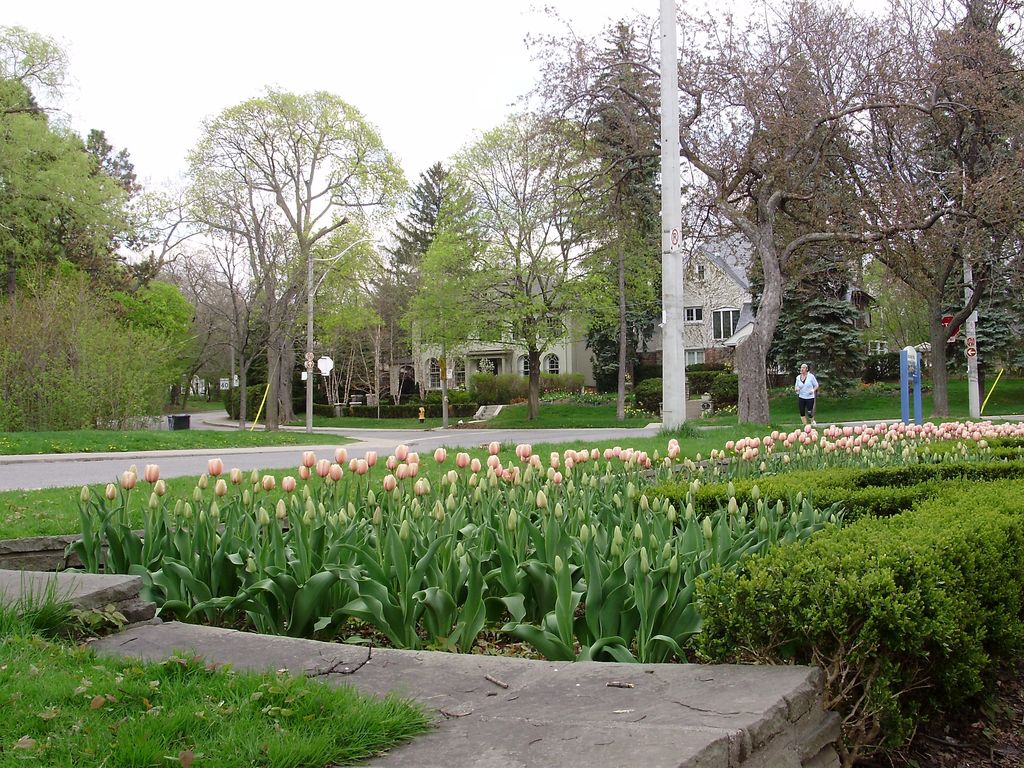
Lawrence Park is one of Toronto's most storied neighbourhoods — and one of its most prestigious. Its wide, tree-lined streets were shaped by bylaws from the 1920s that required architect-designed homes and front-yard trees. Walking through Lawrence Park today, you can still feel that original vision: gracious, quiet, and built to last.
For families who place education at the top of their list, this neighbourhood is exceptional. Lawrence Park Collegiate Institute holds a Fraser score of 9.5/10 — one of the highest in the city. John Ross Robertson Junior Public School scores 9.3/10. The Alexander Muir Memorial Gardens and Sherwood Park offer walking trails and quiet moments of nature right within the neighbourhood.
Bedford Park, its sister neighbourhood just south, offers a similar feel at a somewhat more accessible price point. It has strong public, French, and Catholic school options, an active community hub, and one of the safest walking environments in the city. Many young families find their way here when Lawrence Park feels just out of reach — and they never regret it.
- Detached avg. $4.2M+
- Fraser score up to 9.5/10
- Safest in the city
- Yonge–Lawrence subway
Riverdale & Leslieville
East Toronto · Working-class roots, artistic renaissance
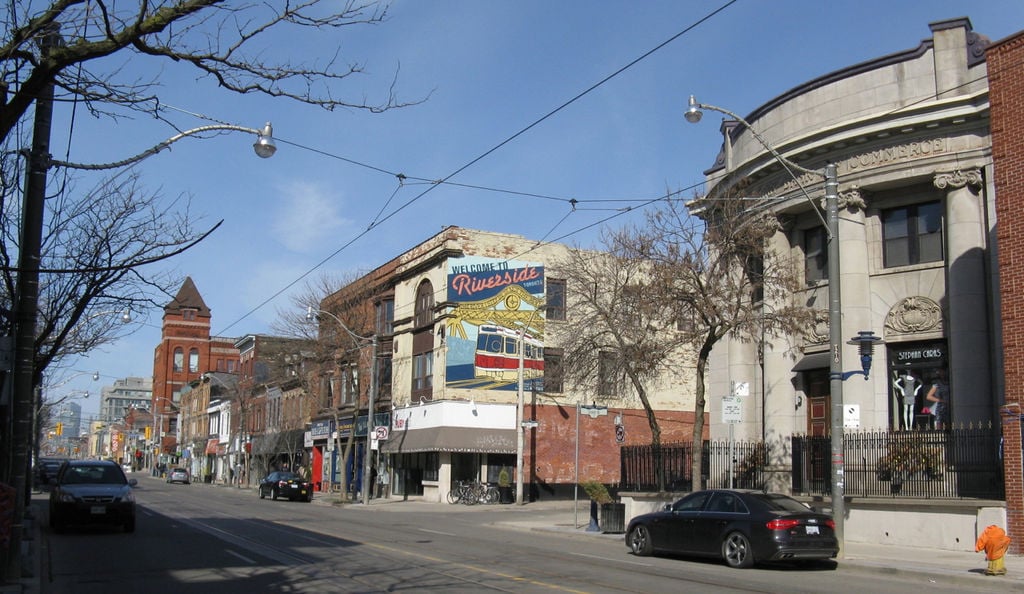
Riverdale has one of the most interesting histories in the city. It was once the location of Toronto's first zoo — before High Park took over that role in 1974. Today, Riverdale Park offers sweeping views of the downtown skyline, outdoor tennis courts, a winter skating trail, and some of the best community baseball diamonds in the city. It is the kind of park where parents sit in the bleachers on summer evenings and feel glad to live here.
Leslieville, just to the south, began as a working-class neighbourhood in the late 1800s and experienced a creative rebirth in the 2000s. Today it is a lively, artsy community with excellent walkability, a tight-knit vibe, and a growing population of young families drawn by its relative affordability. Greenwood Park, Jimmie Simpson Park, and Withrow Park give families ample outdoor space. Schools including Riverdale Collegiate are well regarded. And the Queen streetcar makes downtown feel close.
Semi-detached homes in this area average around $1.5M — offering meaningful value compared to other central Toronto neighbourhoods at the same or higher prices.
- Semis avg. ~$1.5M
- Walkable, artsy vibe,
- 3 parks within walking distance
- Queen streetcar
Danforth Village & East York
East Toronto · Greek heritage, multicultural soul
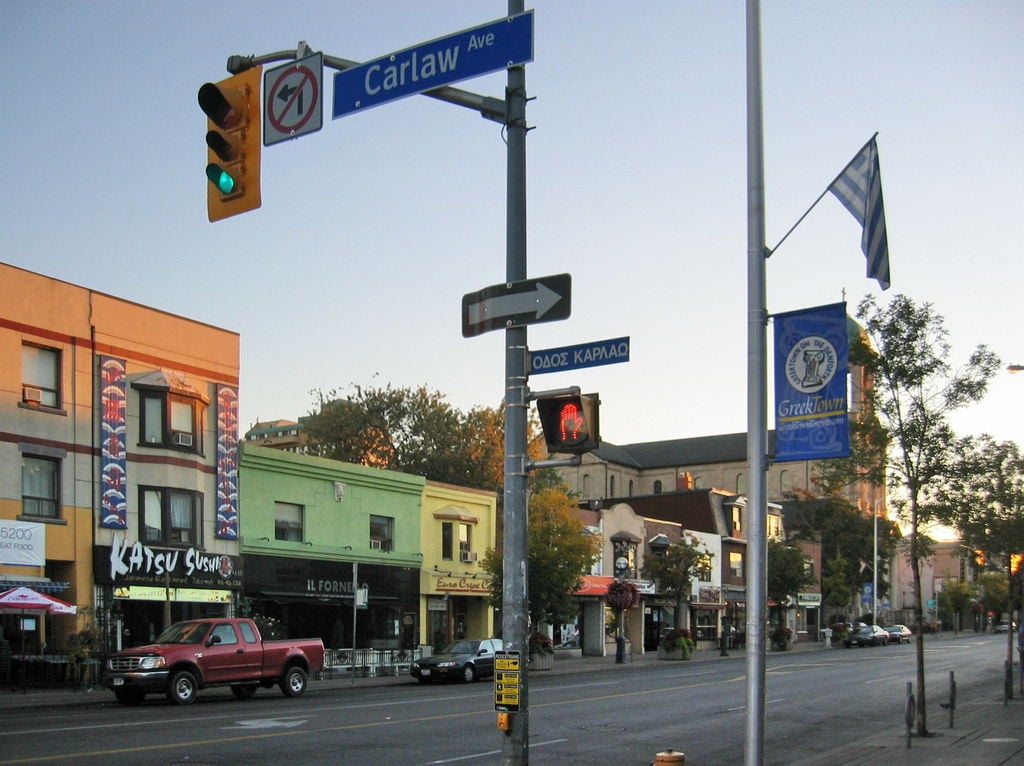
For families who want the full Toronto experience at a more approachable price point, Danforth Village delivers on every count. The Danforth has been shaped by Greek immigration since the 1950s, and that cultural richness still flavours the street — in the bakeries, the tavernas, the Greek Orthodox church, and the annual Taste of the Danforth festival that brings over a million visitors each summer. It is one of the most vibrant, human-scaled streets in the city.
East York, just to the north, offers some of the most affordable detached homes in central Toronto — starting from $1.3M — alongside a quiet, community-oriented feel that surprises many buyers who expect affordability to mean compromise. It does not. The schools are solid. The parks are generous. And the transit — including direct subway access from the Danforth stations — makes commuting manageable.
For first-time family buyers being priced out of Leslieville or Riverdale, Danforth Village is often the neighbourhood that surprises them with how much they can get — and how quickly they feel at home.
- Detached from ~$1.3M
- Danforth subway access
- Strong multicultural community
- Best entry-level value
Why this moment in Toronto's history matters for families
Toronto has seen many market cycles. The city grew slowly for its first hundred years, accelerated dramatically after World War II, and entered a period of intense price appreciation in the 2010s. What we are experiencing now — in 2026 — is a moment of recalibration. Prices have softened from their peaks. Buyers have more time and more choices. And the fundamentals that have always made Toronto one of the world's great cities have not changed one bit.
In fact, they are strengthening. Supply is tightening. Future condo completions are falling sharply after 2026. And the families who plant roots in these neighbourhoods today are building equity in a city that has, over every meaningful time horizon, continued to grow in value and in vitality.
The families who bought in Leaside in the 1990s, in Leslieville in the 2000s, and in Danforth Village in the 2010s — they all bought into communities that felt right. And the city rewarded them, year after year, in ways that went far beyond the financial.
Let me help you find your neighbourhood
Every family is different. Your ideal neighbourhood depends on your children's ages, your commute, your budget, and the kind of life you want to live. That is why I do not just send listings. I listen first.
My Concierge Method starts with a conversation — about your life, your priorities, and the neighbourhood that will feel like home the moment you walk down the street. Then I do the work to get you there.
"With you beyond the transaction." —
Patricia Grieco, Broker, RE/MAX Professionals Inc.
Check out this article next