
There is a moment, early in spring, when the air in Toronto shifts. The cold loosens its grip, the city exhales, and people start thinking about home again. About moving. About upgrading. About finally making that decision they have been putting off through the long winter months.
This spring, however, there is something else in the air — uncertainty. And at the centre of that uncertainty sits a quiet but powerful institution: the Bank of Canada.
On April 29th, 2026, the Bank of Canada held its overnight rate steady at 2.25%. It was the fourth consecutive meeting with no change. And while a hold may sound like nothing happened, the story behind that decision is anything but quiet.
Let me walk you through what it means — and why it matters to you.

The Rate That Shapes Everything
Most people know that interest rates affect mortgages. But fewer people understand just how deeply rates touch every corner of a real estate decision — from how much you can borrow, to what your monthly payment looks like, to how motivated sellers are, to how many buyers are competing for the same home.
The Bank of Canada's overnight rate is, in simple terms, the cost of money in Canada. When the Bank raises it, borrowing becomes more expensive across the board. When it lowers it, money flows more freely. Banks use it as the foundation for setting their prime rate — currently sitting at 4.45% — which in turn shapes variable mortgage rates across the country.
For the past several months, the Bank has chosen stillness. Not because everything is calm, but because the path forward is genuinely unclear. And understanding why they held — and what they are watching — gives you a meaningful advantage as you plan your next move.
Why Did the Bank Hold?
To answer that, we need to look at the three economic pillars the Bank watches most closely: GDP growth, employment, and inflation.
Canada's GDP grew a modest 0.2% in February 2026, in line with forecasts but far from impressive. More telling was the flash estimate for March — a completely flat reading of 0.0%. The economy is not collapsing, but it is not surging either. It is moving carefully, one cautious step at a time.
On the employment front, March brought a net gain of approximately 14,000 jobs nationally — a welcome improvement after a painful cumulative loss of 109,000 jobs in the first two months of the year. Ontario held steady, which is meaningful for our market. But the quality of those new jobs told a more nuanced story: full-time positions actually declined by about 1,000, while part-time roles accounted for nearly all the growth. Encouraging on the surface, but worth watching beneath it.
Then there is inflation. March's headline inflation came in at 2.4% — up from 1.8% in February and slightly below the market expectation of 2.5%. At first glance, that seems manageable. But dig a little deeper and you find the real story: gasoline prices surged 21.1% in a single month, and 5.9% year-over-year. Strip out gasoline entirely, and inflation was a much calmer 2.2%.
The Bank of Canada is watching those energy prices very carefully. Because if oil prices stay elevated — driven by ongoing conflict in the Middle East and disruptions through the Strait of Hormuz — that gasoline-driven inflation could spread into other areas of the economy. And that changes everything.
Three Roads Forward
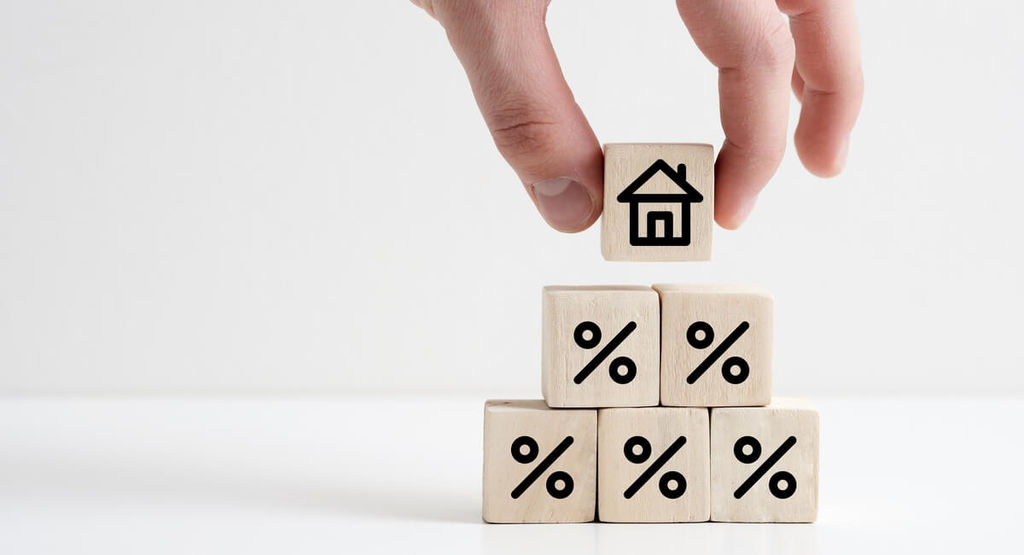
What makes this moment particularly interesting — and admittedly a little nerve-wracking — is that the Bank of Canada itself has outlined three distinct paths that rates could take from here.
The first path is stability. If oil prices moderate and US tariffs remain at current levels, the Bank has signalled that keeping rates close to where they are today looks appropriate. Any changes, if they come, would likely be small.
The second path is lower rates. If the United States imposes significant new trade restrictions on Canada — disrupting the Canada-US-Mexico trade agreement further — the Bank may need to cut rates to stimulate economic activity and protect growth. This would be good news for variable-rate mortgage holders and buyers on the sidelines.
The third path is higher rates. If energy prices remain elevated and that inflation begins to spread more broadly through the economy, the Bank may find itself in the uncomfortable position of needing to raise rates — possibly consecutively. This is the scenario that deserves the most attention right now, because bond markets are already beginning to price in that possibility.
As of early May 2026, investors were placing roughly a 44% probability on a rate hike at the Bank's next meeting on June 10th. That is not a certainty. But it is a signal worth taking seriously.

Fixed Rates: A Different Story Entirely
Here is something that surprises many of my clients when we first discuss it. Fixed mortgage rates do not follow the Bank of Canada directly. They follow Government of Canada bond yields — and those yields move every single day, based on what investors around the world expect to happen with the economy.
Between October 2025 and late April 2026, the 5-year Government of Canada bond yield swung by approximately 0.64% — from a low of 2.62% all the way up to a peak of 3.26% on April 29th. That kind of movement directly translates into changes in fixed mortgage rates, sometimes within days.
What drove those swings? A series of dramatic economic moments: a blockbuster Canadian jobs report in November that sent yields up 20 basis points in a single day, the start of the US-Iran conflict on February 28th triggering an oil shock, and ongoing uncertainty around trade negotiations — all colliding in a compressed period of time.
The lesson here is both simple and important: waiting for the "perfect" rate environment may mean waiting through significant volatility. Bond yields — and the fixed rates tied to them — can move quickly and unexpectedly. Securing a rate hold today protects you from upward movement, while keeping you positioned to benefit if rates come down.

What This Means for You
If you are thinking about buying a home this spring or summer, or if your mortgage renewal is approaching in the next six to twelve months, this is not a moment to sit back and wait passively. It is a moment to get informed, get prepared, and get strategic.
The Toronto market itself is showing some genuinely encouraging signs. March 2026 marked the first year-over-year increase in sales in a long time — up 1.7% compared to March 2025. Active listings actually declined 8% year-over-year, the first such decrease in nearly four years. And the sale-to-list price ratio climbed back to 98% after hitting a 25-year low of 96.5% in December 2025.
These are not dramatic headlines. But in a market that has been navigating headwinds for several years, they are quiet signals of stabilization — and possibly the early stages of something more.
Real estate, at its best, is not a transaction. It is a life decision. And life decisions deserve careful, informed guidance — not rushed moves driven by fear, and not paralysis driven by uncertainty.
That is the philosophy behind everything I do. My Concierge Method is built on the belief that the best outcomes happen when clients are fully informed, well-supported, and moving at the right pace for their own lives — not the market's timeline.
If you are wondering what today's rate environment means for your specific situation — whether you are buying, selling, upsizing, downsizing, or simply exploring — I would love to have that conversation with you. Reach out anytime. I am always here.

Check out this article next